Legend of YMIR: Complete Beginner Guide – Best Classes, Leveling, Farming, Gear, PvP, and Codes
The first few hours of Legend of YMIR can feel deceptively simple. You pick a class, let auto-combat handle a few monsters, follow the main quest, equip whatever has the biggest green number, and everything seems pretty straightforward.
Then the game starts opening up.
Suddenly you are managing Combat Power, enhancement materials, skill books, equipment rarity, companions, daily dungeons, Amber, marketplace prices, boss timers, guild activities, inter-server battles, and an entire WEMIX economy sitting beside the traditional MMORPG progression loop. That is usually the point where a beginner either starts playing efficiently or burns a frightening amount of resources on upgrades that will be replaced a few days later.
This Legend of YMIR beginner guide is built around the things I would want to know before starting a fresh character. I will cover classes, leveling, AFK farming, gear, skills, PvE, PvP, boss content, currencies, guilds, blockchain features, and coupon codes without assuming you already understand every menu in the game.
One quick class note before we start: the current Global version also includes Rune Fighter. Since the requested class breakdown below focuses specifically on Archer, Volva, Skald, Warlord, and Berserker, those five get the detailed sections, but I will still account for Rune Fighter when discussing the modern class meta.
I. Legend of YMIR: Complete Beginner Guide
A. What Is Legend of YMIR?
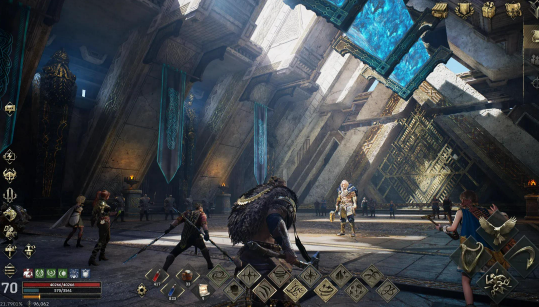
Legend of YMIR is an MMORPG built around Norse mythology, large-scale character progression, open-world grinding, boss content, guild competition, and server-versus-server conflict.
The game uses Unreal Engine 5, and visually it is much closer to the modern Korean MMORPG style than the lightweight mobile RPG look you might expect from something that also runs on phones. Armor has a lot of detail, environments are large, monsters have weight to their animations, and boss encounters become much more impressive once you move beyond early quest mobs.
The story revolves around a world threatened by Ragnarok and borrows heavily from Norse names, myths, monsters, and locations.
Gameplay mixes automated progression with manual combat.
Auto-combat is great when I am grinding normal enemies, completing repetitive objectives, or leaving the character running while doing something else. But harder bosses and serious PvP are different. Dodging, skill timing, positioning, target selection, and reacting to enemy abilities become much more important once raw Combat Power is no longer enough to carry the fight.
That combination is basically the heart of Legend of YMIR: automate the repetitive growth, but expect to play properly when the battle actually matters.
B. Legend of YMIR Global, Mobile, PC, and Cross-Platform Play
The Global version of Legend of YMIR supports PC, Android, and iOS, giving you considerably more flexibility than a PC-only MMO.
For long grinding sessions, I prefer PC. The larger display makes boss telegraphs easier to read, inventory management is less annoying, and large battles are simply easier to follow.
Mobile is great for shorter sessions. Checking daily quests, moving farming spots, collecting rewards, sorting basic inventory, and monitoring your character while away from the PC are all much more convenient from a phone.
Steam is also available as a PC route in the current version.
One thing I strongly recommend is deciding your account and server setup before investing heavily. Regional servers and some platform-specific server structures matter, particularly if you intend to play with friends or join a particular guild.
Do not spend three days building a character only to discover everybody you wanted to play with started somewhere else.
C. How to Download and Start Playing
For mobile, install Legend of YMIR from your platform's official application store.
For PC, use the official client or Steam version where available for your intended server environment.
After installation, the first important choices are:
Select the correct region and server.Create or connect the account you plan to keep.Choose a class that fits your actual playstyle.Complete the tutorial rather than immediately wandering off to grind.Push the main quest until the core progression systems begin unlocking.Do not spend premium currency during your first hour just because a notification is flashing.
MMORPG interfaces are designed to show you twenty things you could buy. That does not mean any of them are necessary for early progression.
II. Choosing the Best Legend of YMIR Class
A. Legend of YMIR Class Tier List
If I were ranking classes for a new player based on a mixture of PvE, farming, survivability, F2P friendliness, PvP, and ease of progression, I would use something close to this:
TierClassBest ForSArcherBeginners, F2P, farming, solo PvESRune FighterBurst damage, active combat, experienced playersAVolvaAoE PvE and fast mob clearingASkaldSustain, support, AFK grindingBWarlordPvP, group content, durabilityCBerserkerHigh-investment melee burstThat overall ranking needs context.
For PvP, I would move Warlord significantly higher.
For pure group utility and long unattended farming, Skald becomes much more attractive.
For clearing packed PvE areas quickly, Volva can feel better than almost anybody.
Berserker's low overall position also does not mean the class is weak. It means the class asks more from your gear, positioning, and account progression before its advantages outweigh the risks of fighting at melee range.
B. Best Class for Beginners, Solo Players, and Free-to-Play Players
For a completely new player, my easiest recommendation is Archer.
Range is an enormous quality-of-life advantage.
When monsters hit hard, a ranged character naturally spends less time standing inside dangerous attacks. When farming, you can begin attacking targets without walking all the way into melee range. During PvP, you can pressure enemies while forcing them to close the gap.
For solo play, I would again choose Archer.
For F2P progression, Archer remains my safest choice because it performs well without requiring expensive gear simply to compensate for the disadvantages of standing beside the enemy.
If you prefer something more relaxed, Skald is the alternative.
Skald may not clear everything as quickly, but healing and sustain reduce potion pressure and make longer farming sessions much more forgiving.
C. Best Classes for PvE, PvP, and AFK Farming
For PvE farming, my choices are:
Archer > Volva > Skald > Warlord > Berserker
For PvP, I lean toward:
Warlord > Rune Fighter > Archer > Berserker > Volva > Skald
For AFK farming, I prefer:
Skald > Archer > Volva > Warlord > Berserker
These rankings can change dramatically with equipment.
A heavily geared Berserker is a completely different animal from a new Berserker wearing whatever the story handed out. The same goes for Warlord: mediocre clear speed early does not prevent the class from becoming extremely annoying in competitive content.
III. Legend of YMIR Class Guide
A. Archer: Ranged Damage, Mobility, and Farming
Archer is the class I recommend when somebody tells me, "I don't know what I want yet; I just don't want to regret my choice."
The class combines ranged physical damage with good mobility and comfortable farming.
That range matters constantly.
While melee characters are still moving between monsters, an Archer is already attacking. Against dangerous bosses, you have more time to recognize attack patterns. In PvP, you can kite slower targets rather than trading damage face-to-face.
For farming, prioritize skills that allow you to tag enemies quickly and hit multiple targets when possible. Arrow Rain naturally fits crowded PvE areas, while faster single-target attacks become more useful against bosses.
Mobility skills such as Backstep-style abilities are not merely panic buttons. Save them for mechanics that actually threaten you instead of wasting them because moving backward looks cool.
For most beginners, Archer offers the best combination of speed, safety, and low frustration.
B. Volva: AoE Magic Damage and PvE Clearing
Volva is the character I would pick if my favorite part of MMORPG grinding is watching an entire pack disappear at once.
Her identity revolves around magical damage and area control.
When enemies are tightly packed, she can clear extremely efficiently. That makes her excellent for quest objectives asking you to kill large numbers of normal monsters.
The tradeoff is sustain.
Compared with Skald, you may burn through more recovery resources during long unattended sessions, especially when farming enemies close to your Combat Power limit.
The solution is not always "buy more potions."
Sometimes moving to a slightly weaker farming area increases your actual EXP per hour because you kill faster, take less damage, and spend less time recovering.
For active PvE players, Volva is one of the most satisfying choices.
C. Skald: Healing, Sustain, and Offline Farming
Skald is easy to underestimate because damage numbers naturally attract more attention than healing.
After a few long AFK sessions, you start appreciating what sustain actually means.
Healing reduces downtime, decreases recovery-item consumption, and makes farming much more stable when you are not constantly watching your character.
Skald also becomes much more valuable in group content.
A DPS class usually improves one player's damage. A good support can improve the survival and consistency of an entire party.
That does not make Skald the fastest solo character, but it does make the class economical.
For players who leave the game farming for long periods, Skald is one of my favorite options.
D. Warlord: Balanced Melee Combat and Survivability
Warlord is the class I would choose if PvP and group battles matter more to me than having the fastest possible solo grind.
The class is durable, controls space well, and can stay in fights that would force squishier characters to retreat.
That makes Warlord valuable around objectives.
In large-scale fights, somebody eventually has to walk into dangerous territory. Ranged characters cannot kite forever when the goal involves holding a position, interrupting an enemy push, or protecting important teammates.
The drawback is progression speed.
If your only goal is grinding normal mobs as quickly as possible, Archer and Volva generally feel more efficient.
But if you want to participate seriously in guild warfare, server competition, or small-scale PvP, Warlord becomes much more attractive.
E. Berserker: High-Risk Melee Damage and PvP Pressure
Berserker is for players who looked at every safer choice and said, "No, I want the giant weapon."
I respect that.
The class is built around aggressive melee pressure and can become extremely threatening once the character has enough stats to survive while staying close to the enemy.
The problem is getting there.
Melee characters naturally take more punishment. In PvP, ranged players can kite you. In boss encounters, you spend more time near dangerous mechanics. During farming, moving between targets reduces some of the advantage offered by high damage.
Good equipment fixes a lot of this.
Once a Berserker has enough durability and offensive power, the high-risk style starts making sense. But it is still not my first recommendation for somebody who wants the easiest F2P route.
IV. Legend of YMIR Beginner Progression
A. Main Quest, Side Quest, and Board Quest Priorities
During early progression, push the main quest first.
Main quests unlock systems, move you into new regions, introduce features, and provide large chunks of early EXP.
Side quests are worth doing when they are along your route or provide useful progression rewards.
Board quests become part of the daily routine and should not be ignored because they add resources and experience on top of whatever farming you are already doing.
My basic priority is:
Main Quest > important unlock quests > daily/board objectives > useful side quests > random grinding
If the main story becomes too difficult, that is when I stop and improve Combat Power.
Do not grind randomly for three hours if upgrading one neglected system would give you the stats needed to continue immediately.
B. Fast Leveling and EXP Guide
Fast leveling in Legend of YMIR is about stacking efficient activities rather than hunting the strongest monster you can survive.
I prioritize:
Main story EXPDaily quest EXPEXP-focused dungeonsEvent EXP bonusesAFK farming in dense monster areasGuild and server activities that provide progression rewardsHot Time bonuses whenever availableFor AFK grinding, the best enemy is usually something you can kill quickly and continuously.
If each monster takes thirty seconds to kill, the higher EXP reward can be misleading.
Ten weaker enemies killed in the same period may produce more EXP, more drops, and less potion consumption.
C. Combat Power and Early-Game Upgrade Priorities
Combat Power acts as a quick snapshot of character growth, but do not blindly chase CP.
Some upgrades provide inflated numbers without solving the problem you actually have.
My early priority is:
Weapon > important skills > armor > accessories > companion/collection systems > secondary progression systems
Your weapon speeds up nearly everything because damage improves questing and farming.
Armor becomes more important when enemies start forcing you out of areas.
Skills should not be neglected because improving a high-use attack often matters more than adding a tiny stat somewhere else.
V. Leveling and Farming Guide
A. Best Farming Locations and Auto-Battle Setup
There is no permanent "best farming location" because your ideal area changes with level, Combat Power, class, and server competition.
The best spot has four characteristics:
Monsters die quickly.Respawns are dense enough that your character rarely stands idle.Incoming damage is manageable.Other players are not stealing every target.If the game spends more time running between monsters than fighting them, move.
If you burn through healing items faster than you earn resources, move.
If another group has completely occupied the area, switch channels or find another spawn.
Your auto-combat setup should also avoid wasting expensive skills on trivial enemies when possible.
B. AFK Farming and Offline Farming Tips
AFK efficiency is not about choosing the highest-level map and walking away.
Before leaving the game farming, check:
Potion supplyInventory weightEquipment durabilitySkill setupMonster densityEnemy aggressionPK or contested-area riskRemaining farming timeInventory weight is especially easy to overlook.
A character can continue fighting while your actual loot efficiency collapses because the inventory has filled with low-value junk.
Clean the bag before long sessions.
Offline progression is useful when you cannot remain connected, but I still prefer active auto-hunting whenever I know the character can safely remain in a productive area.
C. Daily Quests, Daily Dungeons, and EXP Dungeons
Dailies are where disciplined players slowly pull away from inconsistent players.
Even if I only have limited time, I try to clear the activities with the best daily-limited rewards first.
EXP dungeons obviously matter while leveling, but resource dungeons can be equally important because a level without enough Combat Power eventually stops helping.
Boss entries, growth-material dungeons, guild activities, and event missions should all be checked before spending hours on ordinary field farming.
Whenever an event offers increased EXP or drop rates, shift your schedule around that bonus.
VI. Equipment and Gear Enhancement Guide
A. How to Get Rare Equipment
Early Rare gear comes from a mixture of quests, monster drops, dungeons, bosses, crafting, and event rewards.
Temple of Chaos and Folkvang are especially worth watching as you progress because equipment acquisition from these activities has been improved in more recent updates.
Do not assume every Rare drop should immediately replace your current item.
Compare useful stats and enhancement levels.
A heavily enhanced lower-grade piece can occasionally remain better than a fresh replacement until you invest in the new gear.
Rare equipment also has value beyond wearing it because dismantling and crafting systems eventually connect equipment drops to Amber-related progression.
B. Weapon, Armor, and Accessory Upgrades
For most damage-focused classes, I upgrade weapon first.
Faster killing means faster quests, better farming, easier bosses, and less damage taken simply because enemies die sooner.
Armor becomes the priority when survivability becomes your wall.
Accessories should be judged by their stats rather than treated as decorative extras. Offensive bonuses, survivability, accuracy-related stats, and PvP-oriented properties can become increasingly important later.
Avoid enhancing every temporary item aggressively.
Ask yourself: "Am I still likely to wear this tomorrow?"
If the answer is no, keep the investment conservative.
C. Gear Enhancement, Refinement, and Stat Priorities
Enhancement is one of the easiest places to waste resources because the temptation to keep pushing "one more level" is always there.
Do not empty your account trying to force an enhancement milestone you do not currently need.
For offensive classes, I generally prioritize:
Attack > accuracy-related consistency > critical/offensive modifiers > survivability
For Warlord:
Defense/HP > control-related effectiveness > enough offensive power to remain threatening
For Skald:
survivability > healing/support effectiveness > resource efficiency
Refinement becomes more important when you already have equipment worth keeping.
Rolling perfect stats on disposable early equipment is rarely worth the cost.
VII. Skills and Combat Builds
A. Best Skill Builds for Each Class
Archer
Focus on efficient ranged damage, quick attacks, and useful AoE.
Arrow Rain-style skills are ideal for farming, while powerful single-target abilities belong in boss rotations.
Volva
Prioritize wide-area magic and abilities that let you continuously clear clustered enemies.
Skald
Build around sustain first if your goal is AFK farming or group play.
Damage still matters, but removing the main reason you selected Skald makes little sense.
Warlord
Prioritize survivability, crowd control, and abilities that let you remain on top of enemy players.
Berserker
Build around burst damage and closing pressure, but do not completely sacrifice defensive tools.
A dead Berserker has zero DPS.
B. PvE Skill Rotation and AoE Farming Skills
During normal farming, efficiency beats complicated rotations.
Open with an AoE ability when multiple enemies are available, then let cheaper attacks finish survivors.
Do not burn long-cooldown ultimates on a single weak monster if another pack is about to spawn.
Against bosses, rotations become more deliberate.
Save powerful skills for windows where you can safely remain attacking instead of activating everything immediately before the boss forces you to dodge.
C. PvP Builds, Crowd Control, and Ultimate Skills
PvP changes skill value dramatically.
Crowd control that feels unnecessary in PvE can become match-winning against another player.
Mobility also becomes more important because real players do not stand still like monsters.
Warlord should use control to keep targets where they do not want to be.
Archer should maintain distance.
Berserker needs tools that prevent enemies from simply walking away.
Skald needs enough defensive setup to survive focus fire.
Do not activate your Ultimate simply because the button is glowing.
Wait until it can actually swing the engagement.
VIII. PvE, PvP, and Boss Content
A. Best PvE Classes and Builds
For general PvE, Archer and Volva are the easiest recommendations.
Archer brings safe sustained damage.
Volva clears groups quickly.
Skald is excellent when sustainability matters more than speed.
For solo bossing, Archer is comfortable because ranged positioning gives you more room to react.
For group bosses, class rankings matter less because a balanced party becomes more valuable than stacking one supposedly top-tier class.
B. PvP Tier List and Arena Strategy
My practical PvP ranking is:
TierClassesSWarlord, Rune FighterAArcher, BerserkerBVolvaCSkaldWarlord ranks highly because durability and control matter enormously when fighting players.
Rune Fighter adds aggressive modern burst.
Archer can kite extremely well but needs positioning.
Berserker is dangerous once sufficiently geared.
Volva can punish grouped opponents but is easier to pressure.
Skald becomes more valuable in organized group PvP than the solo ranking suggests.
The main PvP rule is simple: do not fight every encounter like a DPS race.
Positioning, cooldown management, crowd control, and target priority win fights.
C. Boss Guide, Raids, and Endgame Content
Bosses are where manual control starts earning its place.
Watch attack animations instead of staring only at your skill bar.
Learn which mechanics can be dodged normally and which require you to create distance.
Keep your strongest burst for safe damage windows.
In group raids, staying alive usually contributes more damage than greedily finishing one additional attack and dying.
Endgame expands beyond ordinary boss hunting into guild conflict, inter-server competition, Battlefront-style activities, server battles, higher-level crafting, advanced gear progression, and economy management.
The game becomes considerably more social at that point.
IX. Currency, Crafting, and Resources
A. Gold, Silver, Crystals, Diamonds, and Emblems
Legend of YMIR throws a lot of resource types at you, and beginners often treat all of them as interchangeable.
They are not.
Silver is one of the everyday progression resources and disappears surprisingly quickly once upgrades become expensive.
Diamonds are considerably more valuable because they interact with the marketplace and premium economy.
Crystal-type materials usually connect to specific growth systems rather than functioning as simple cash.
Emblems and similar progression resources should be saved until you understand which system they belong to instead of consuming everything immediately.
The most important habit is reading the item description before using a rare resource.
MMORPGs punish impulse spending.
B. Amber Mining and Resource Farming
Amber becomes one of the resources you will repeatedly return to.
You can obtain Amber through quests, farming, dedicated gathering opportunities, and mining spots.
When mining a known Amber location, channel switching can improve efficiency because resource availability is not always identical between channels.
Amber is important for crafting and can also become part of the player economy once converted into appropriate tradable forms.
Recent updates have also expanded the importance of Azure Amber, including additional equipment-related crafting paths.
My advice is simple: never treat Amber as trash just because the early game gives you some easily.
You will want more later.
C. Crafting, Marketplace, and Inventory Weight Management
Crafting is not only about making equipment for yourself.
Some successfully crafted items can become tradable depending on the crafting result and system involved, creating a connection between progression and the marketplace.
Before crafting something expensive, check:
Required materialsWhether the result is boundWhether a tradable outcome is possibleCurrent marketplace valueWhether buying the item would actually cost lessThe marketplace can save you from awful RNG.
It can also drain your Diamonds if you buy everything impulsively.
Inventory weight deserves equal attention.
Sell, dismantle, store, or process unwanted loot before long grinding sessions.
An organized inventory is not exciting, but neither is discovering you spent two hours farming while unable to efficiently collect drops.
X. Guilds and Inter-Server Content
A. Guild Benefits, Activities, and Rewards
Join an active guild as soon as it makes sense.
A good guild gives you more than a chat room.
Guild activities provide rewards, group opportunities, access to coordinated boss content, competitive events, and players who can explain server-specific information that a generic guide cannot.
Daily contribution also matters.
Do not be the player who joins the strongest guild available and then never participates.
Active guilds usually expect active members.
B. Inter-Server Gameplay and Competitive Content
Legend of YMIR leans heavily into server competition.
Inter-server content allows players from different server communities to meet in larger competitive environments, and newer updates continue expanding that side of the game.
Battlefront and server battles reward more than personal Combat Power.
Organization matters.
A guild full of individually powerful players can still lose to a group that communicates better, controls objectives, and moves together.
If large-scale PvP is your goal, join a guild with scheduled participation rather than choosing purely based on leaderboard position.
C. Events, Community Features, and Daily Participation
Check events every time you log in.
This sounds obvious, but event rewards are often dramatically more efficient than ordinary grinding.
Anniversary events, check-ins, mission chains, Hot Time buffs, special merchants, summon discounts, streamer programs, and community events can all accelerate an account.
The difference between an efficient F2P account and an inefficient one is often not money.
It is whether the player consistently collects temporary free value.
XI. WEMIX and Blockchain Features
A. WEMIX PLAY and Wallet Linking
The Global version of Legend of YMIR integrates with WEMIX PLAY.
You do not need to treat blockchain features as your main reason for playing, but if you plan to participate in token-related systems, understand the wallet rules before clicking through them.
One game account can be connected to one supported wallet.
More importantly, using certain token functions can permanently bind the relationship between that game account and wallet.
This is not a menu where I would casually connect a temporary wallet just to see what happens.
Decide what wallet you actually intend to use first.
B. gWEMIX, WEMIX, YMC, and YMT Resources
The names are easy to mix up, so here is the simplified version.
gWEMIX is tied directly to Legend of YMIR's gameplay economy and can be created through game-related acquisition systems before being used within supported token features.
At higher progression requirements, gWEMIX can interact with the Station and WEMIX ecosystem.
WEMIX is the wider ecosystem asset.
YMT, or YMIR Treasure, functions as a major utility resource within the Legend of YMIR ecosystem and appears in areas such as the YMT Store and partner-server economy.
YMC, or YMIR Cash, originated from the Founders Pack ecosystem and has a more specialized role than ordinary gameplay currency.
For a normal beginner, none of this should distract you from leveling, equipment, and Combat Power.
Understand the traditional game first.
C. Web3 Features and Account Security
Treat wallet security like real financial security.
Never give anyone your recovery phrase.
Never paste private keys into a "reward" website.
Do not trust random Discord messages claiming you won something.
Check the domain before connecting a wallet.
Use unique passwords and enable available security features.
MMORPG scams existed long before blockchain games. Adding tradable digital assets simply gives scammers another reason to target careless players.
XII. Legend of YMIR Coupon Codes
A. Active Redeem Codes and Coupon Rewards
Coupon codes in Legend of YMIR are heavily event-driven, and many disappear quickly.
As of the current September 2026 check, the safest general code I would try first is:
CodeRewardILOVE8WEMIXPromotional reward packageI am deliberately not filling this section with twenty old codes just to make the list look impressive.
Several older codes continue appearing on coupon websites even after other trackers mark them expired. Codes associated with anniversaries, championships, livestreams, and regional promotions are especially likely to disappear after their event window closes.
You may still see codes such as THLOVE500YMIR, YMIRTH1KWEMIX, MERRY2025YMIR, YMIRCUPWIN, and various YMIR Cup livestream codes circulating online. Treat those as legacy or event-specific codes rather than guaranteed current rewards.
If they work on your server, great. I would not plan an account around them.
Creator and streamer coupons can also have separate validity windows, so an active creator's current coupon may be more useful than an old global event code.
B. How to Redeem Codes
On supported versions, the basic in-game method is:
Menu > Settings > Account > Coupon
Enter the code exactly as provided.
Rewards are normally delivered through the appropriate product/reward storage rather than magically appearing in your inventory.
You can also use the official website's account area for coupon registration when available for your platform.
This is especially useful for players whose mobile platform does not expose the same in-game redemption option.
If a code fails, check:
CapitalizationExpiration dateRegion restrictionsCharacter-level requirementWhether the account has already redeemed itDo not repeatedly enter random variations. Most failed codes are simply expired.
C. Where to Find New Legend of YMIR Codes
The best places to watch are the official:
Game websiteDiscordWEMIX PLAY communityLivestreamsFacebook pagesSpecial tournament broadcastsAnniversary announcementsStreamer/creator campaignsLivestream codes can have extremely short redemption periods.
If you care about free rewards, enabling announcements on the official community is more effective than checking an outdated coupon article once every six months.
XIII. Legend of YMIR FAQ
A. What Is the Best Class in Legend of YMIR?
For most beginners, I recommend Archer.
It combines ranged damage, mobility, good farming speed, solid PvE performance, and enough PvP potential that choosing it rarely feels like a mistake.
If PvP is your main priority, Warlord becomes one of the strongest choices.
If you mainly want AoE PvE farming, choose Volva.
For relaxed AFK farming and group support, Skald is excellent.
Berserker is better suited to players who enjoy aggressive melee combat and are willing to invest more into making the class comfortable.
Rune Fighter is also a strong modern offensive choice for players who want a newer, more active burst-oriented class.
B. How Do You Level Up Fast in Legend of YMIR?
Push the main quest until you hit a progression wall.
Then complete high-value daily content, EXP dungeons, board quests, event missions, and efficient AFK farming.
Always take advantage of temporary EXP events and Hot Time periods.
When farming normally, kill enemies efficiently instead of selecting monsters simply because they have the highest level.
Fast kills plus dense respawns usually beat slow fights against stronger targets.
C. Which Class Is Best for PvP and Farming?
For PvP, my safest recommendation is Warlord, with Rune Fighter, Archer, and a properly geared Berserker also being strong choices.
For farming, Archer is the best all-round option.
Volva is excellent for active AoE clearing.
Skald is probably the most comfortable choice for long unattended sessions because sustain reduces downtime and resource consumption.
D. Can You Play Legend of YMIR on PC and Mobile?
Yes. Legend of YMIR is available through PC and mobile versions, including Android and iOS, while Steam provides an additional PC route.
PC is my preferred option for bosses, PvP, inventory management, and longer sessions.
Mobile is excellent for checking farming, completing shorter daily tasks, and managing your character away from the computer.
Just make sure your chosen account and server setup matches where your friends or guild are playing before investing heavily.
Let's wrap things up
Legend of YMIR becomes much easier once you stop treating it as a race to increase one Combat Power number and start thinking about account efficiency.
For a new player, the first major decision is class choice. Archer is still my favorite beginner recommendation because range, mobility, farming efficiency, and relatively safe solo progression solve a lot of problems before they appear. Volva is great for players who want fast AoE clears, Skald is fantastic for sustain and AFK play, Warlord becomes increasingly valuable in PvP and organized group content, while Berserker rewards players willing to accept more risk for melee pressure. Rune Fighter also deserves consideration in the current version if you prefer active burst-focused combat.
After choosing your class, keep progression simple. Push the main story, complete important unlocks, use daily content before random grinding, and upgrade the equipment that actually improves your current bottleneck. A better weapon helps when damage is the problem; another random defensive upgrade will not magically fix a timer.
For farming, efficiency matters more than monster level. Find dense spawns you can kill quickly, maintain your potions, clean your inventory, and take advantage of EXP events whenever they appear. For equipment, resist the urge to dump rare materials into every temporary piece. For Amber, crafting materials, Diamonds, and blockchain-related resources, assume they will become more valuable later until you understand their long-term use.
The same philosophy applies to PvP. Your Combat Power helps, but it cannot replace movement, control, positioning, and understanding your class. Warlord wants to control the fight. Archer wants space. Berserker wants to close that space. Volva wants enemies grouped where her magic matters. Skald wants to keep the team functioning longer than the opponent expects.
And finally, do not let the WEMIX side of Legend of YMIR distract you from the game itself. Learn the MMORPG first. Connect wallets carefully, protect account credentials, and treat anything with real-world value more seriously than an ordinary game item.
If I were starting Legend of YMIR again from zero, I would choose a class I can comfortably farm with every day, rush the important progression unlocks, join an active guild early, save premium resources until I understand their value, and build one strong character instead of trying to upgrade everything at once.
That approach is not flashy, but in an MMORPG built around months of progression, it is exactly the kind of decision that pays off.